case file
Mormon doctrine is not Christianity.
LDS teaching keeps Christian words and changes what they mean. Its God, Christ, salvation, scripture, and church authority all depart from the faith taught by Scripture.
controlling question
Does LDS doctrine teach the same God, same Christ, and same gospel as the apostles?
- Public standard
- Scripture
- LDS doctrine
- Official LDS sources
- Verdict
- Doctrinal mismatch
Common ground
Sincere faith in Jesus does not settle what a church teaches.
Real devotion
Many Latter-day Saints sincerely love Jesus, read Scripture, serve sacrificially, and speak of grace.
Different doctrine
Official LDS sources do not teach the same God, same Christ, same gospel, or same authority that Scripture and historic Christianity confess. They say so in their own words.
seven core arguments
Same vocabulary, different doctrine.
The names are familiar; the definitions differ. Scripture confesses one eternal God, the eternal Son, and the apostolic gospel. LDS doctrine changes each of them.
No. 01
A different God
The Bible confesses one eternal God. LDS doctrine teaches separate divine beings, an embodied Father, and exalted humans becoming gods.
No. 01
A different God
Psalm 90 starts with eternal Godhood
Psalm 90 puts the Lord before the world, before the mountains, and before every creaturely life. He is God from everlasting to everlasting. He did not become God within a larger order.
Christian monotheism says what God is: eternal, uncreated, and not one member of a divine species or family into which others may later rise.
Isaiah denies other true gods
Isaiah is categorical. No God was formed before the Lord, none will be formed after Him, there is no other, and the Lord knows no other God. The Lord also made all things alone, not alongside other divine beings.
These claims do not fit a system where the Father, Son, and Holy Ghost are separate divine beings and exalted humans may become gods. Isaiah does not tell Israel to prefer one God among many real gods. He denies that any other true God exists beside, before, after, or around the Lord.
No. 02
A different Jesus
LDS doctrine honors Jesus, but it places Him in a premortal family of spirit children instead of confessing the eternal Son, of one divine essence with the Father.
No. 02
A different Jesus
The dispute is identity, not warmth toward Jesus
LDS sources plainly teach that Jesus is central to LDS faith, that He is confessed as Savior and Redeemer, and that He is uniquely obedient and victorious. Latter-day Saints speak reverently about Him.
What matters is whether the Jesus they confess is the eternal Word through whom, in the New Testament, all created things came to be. A shared name and sincere devotion do not settle that.
Colossians makes firstborn a supremacy claim
Colossians calls Christ the firstborn of all creation, and the next sentence explains the title: all things in heaven and on earth, visible and invisible, were created by Him and for Him. Thrones, dominions, rulers, and authorities are among the all things that depend on the Son.
So firstborn cannot mean the first creature in a sequence. The Son is before all things, the agent of all things, the goal of all things, and the one in whom all things hold together. The title marks His supremacy over a creation that exists through Him and for Him.
No. 03
The Trinity from the Bible
The word Trinity is later, but the biblical pattern is early: one God, the Son as God, the Spirit as God, and real personal distinction.
No. 03
The Trinity from the Bible
Scripture starts with one God
The Christian doctrine of the Trinity begins where Israel's confession begins: there is one God. Deuteronomy 6 confesses one Lord, Isaiah denies any other God before, after, beside, or unknown to the Lord, and Paul can speak of many so-called gods while still confessing one God and one Lord.
The Trinity does not leave monotheism. It answers who belongs inside the identity of the one God, and any Christian account of Father, Son, and Spirit has to stay within that limit.
The Son is named as God and Creator
John says the Word was with God, was God, and made all things. Thomas confesses the risen Jesus as Lord and God. Colossians says all things in heaven and on earth were created by Him and for Him, and Hebrews places the Son above angels with divine honor and throne language.
These texts say more than that Jesus is authorized by God or unusually close to God. They put the Son on the Creator side of the Creator-creature line. Christianity confesses the Son as true God because the New Testament gives Him divine identity, work, honor, and name.
No. 04
Restoration versus continuity
LDS authority depends on the claim that Christianity lost priesthood authority and needed Joseph Smith's restoration.
No. 04
Restoration versus continuity
The strongest LDS argument
The strongest LDS case does not rest on a minor complaint about church history. It says the New Testament itself warns of false teachers, wolves, corrupt leaders, and departure from the faith, and that after the apostles died the church lost priesthood authority, plain doctrine, ordinances, and the fulness of the gospel.
On that reading, Joseph Smith did not found one more denomination. He was called because none of the existing churches had the full apostolic authority Christ intended, and Joseph Smith-History's command to join none of them belongs to that claim.
The warnings prove real danger
The New Testament expects false teaching, spiritual deception, loveless churches, abusive leaders, and people who abandon the faith once delivered, and Christianity should not downplay those warnings. Church history also includes real corruption, bad theology, moral failure, and institutional abuse.
Those facts show that churches need correction, discipline, reform, and constant return to the apostolic word. They do not by themselves show that Christ's whole earthly church lost the gospel and saving priesthood authority for centuries.
No. 05
Revelation must be tested
God can speak, but Galatians 1 forbids later revelation from redefining the apostolic gospel.
No. 05
Revelation must be tested
Galatians 1 gives the test
Paul says a different gospel must be rejected even if an angel from heaven announces it. That bears directly on restoration claims that rest on angelic ministry and new scripture.
A later prophet cannot change the doctrine of God, Christ, church, and salvation and then ask to be accepted on that prophet's own word.
Spiritual claims must be tested
Scripture commands believers to test spirits, examine claims, and obey God. A spiritual witness does not authenticate itself.
If a testimony leads away from the apostolic doctrine of one God and the eternal Son, it fails the biblical test.
No. 06
Salvation and exaltation
LDS grace language sits inside restored ordinances, temple sealing, and exaltation, which the apostolic gospel does not teach.
No. 06
Salvation and exaltation
Start with LDS grace honestly
Latter-day Saints do not deny grace, Christ's atonement, repentance, or divine help. Official LDS teaching speaks directly about grace through Jesus Christ.
In LDS teaching, grace sits alongside restored priesthood authority, laws and ordinances, covenants, worthiness, temple worship, and the goal of exaltation. Grace has to be read inside that arrangement.
The New Testament makes works fruit
Ephesians 2 says salvation is by grace through faith, not from works, and then says believers are created in Christ for good works. Romans 3 and Titus 3 give the same order: God's mercy and Christ's saving work are the ground, not righteous deeds.
Obedience is not optional, but it is the fruit of new life in Christ, not a ladder into exalted godhood. The Christian dispute concerns the role of works and ordinances in salvation, not whether disciples should obey.
No. 07
Priesthood and temple authority
The highest LDS salvation depends on restored priesthood keys and temple ordinances as well as faith in Christ.
No. 07
Priesthood and temple authority
The issue is not whether ministry matters
Historic Christians do not deny church order, pastoral ministry, baptism, the Lord's Supper, discipline, ordination, or the need for the church to act under Christ's authority. They dispute whether Christ's church lost saving priesthood authority and needed Joseph Smith to restore it.
LDS teaching says priesthood authority and keys were withdrawn after the apostles and restored in the latter days. If that is true, ordinary Christian ministry was not just disordered or incomplete. It lacked the authority needed for essential ordinances.
Hebrews relocates priesthood confidence
Hebrews treats the Aaronic and Levitical priesthood as real, biblical, and limited. It could offer sacrifices within the old covenant, but it could not bring final perfection, and its priests were many because death prevented them from continuing.
Hebrews then turns to Melchizedek language to show the superiority of Christ. Believers are not told to look for a later chain of Melchizedek office holders for saving access to God. Jesus Himself is the priest who fulfills what the former priesthood could not complete.
comparison table
Same words, different meanings
The same vocabulary can carry different doctrine, so the table sets the biblical definition of each term beside the LDS one.
| Same word | Historic biblical meaning | LDS doctrinal meaning |
|---|---|---|
| God | A Godhead of separate beings, with the Father embodied and exalted humans becoming gods.GodheadD&C 130Becoming Like GodD&C 132 | |
| Jesus | Jehovah and Savior, and also the Firstborn spirit Son in the family of Heavenly Parents.PremortalityHeavenly ParentsChosen Savior | |
| Gospel | Grace, joined to restored priesthood authority, ordinances, temple covenants, and exaltation.GraceArticles of FaithD&C 131D&C 132 | |
| Scripture | The Bible is affirmed as far as it is translated correctly, alongside additional scripture, living prophets, and restored revelation.Articles of FaithBibleD&C 20Moroni 10 | |
| Church | The fullness and priesthood authority were lost and restored through Joseph Smith.ApostasyRestorationJSH 1 | |
| Authority | Priesthood authority and keys were lost after the apostles and restored through Joseph Smith for saving and exalting ordinances.ApostasyRestorationStudy GuidePriesthood | |
| Revelation | An open canon and living prophets can introduce restored doctrine that changes the faith Christians have historically confessed.Articles of FaithMoroni 10D&C 20Bible | |
| Salvation | The highest salvation is exaltation, tied to priesthood authority, ordinances, temple endowment, sealing, and becoming gods.GraceD&C 131D&C 132Eternal LifeSealing |
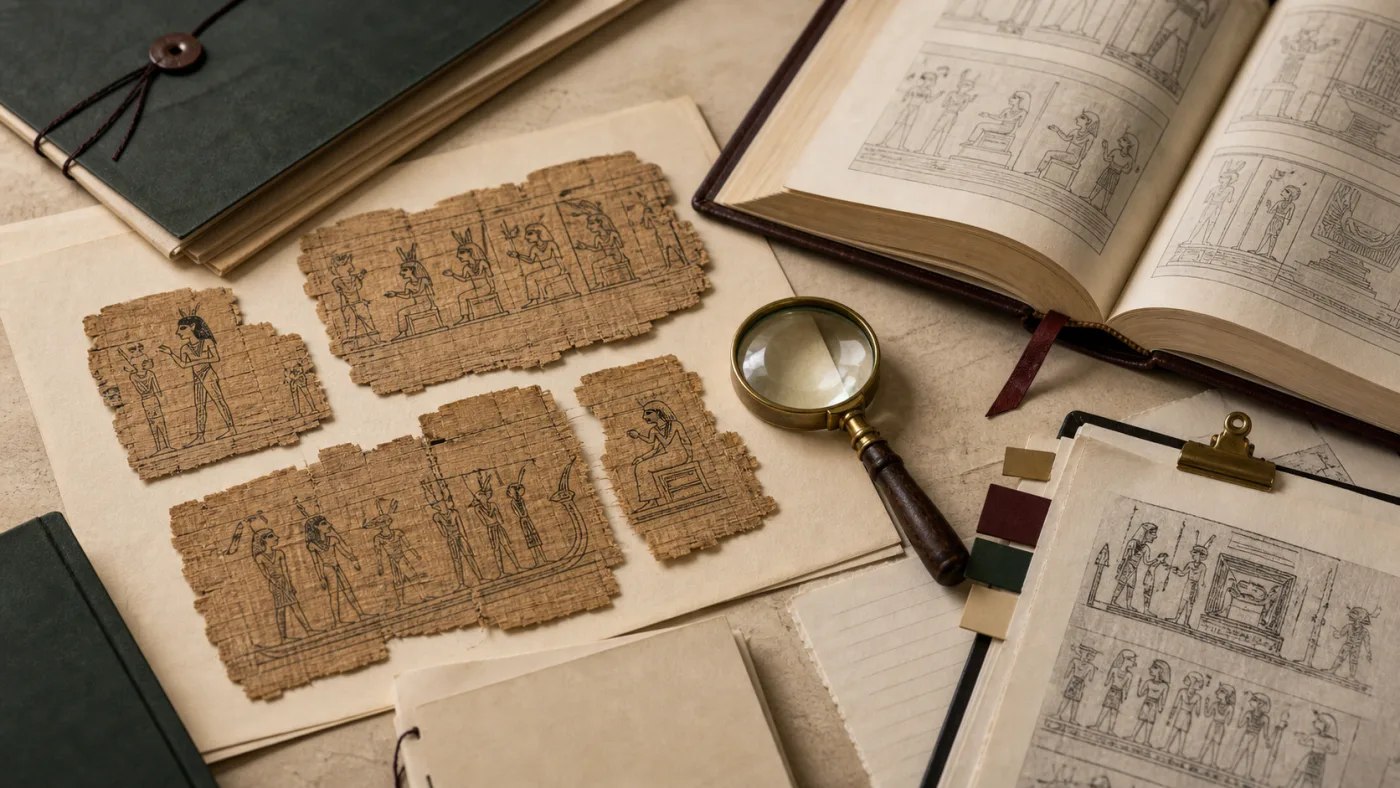
translation claim
Book of Abraham
Joseph Smith's claim to have translated Egyptian papyri returns the discussion to his prophetic reliability and to private revelation.

time-bound prophecy
Independence temple prophecy
D&C 84 says the Missouri temple would be reared in this generation. Official LDS history confirms it was not built at that time.
video response
A fair answer to the LDS video.
The video is right that Latter-day Saints sincerely affirm Jesus. It is wrong to think sincerity and religious fruit settle Christian doctrine.
Read the responseA direct reply to the video's strongest claims